
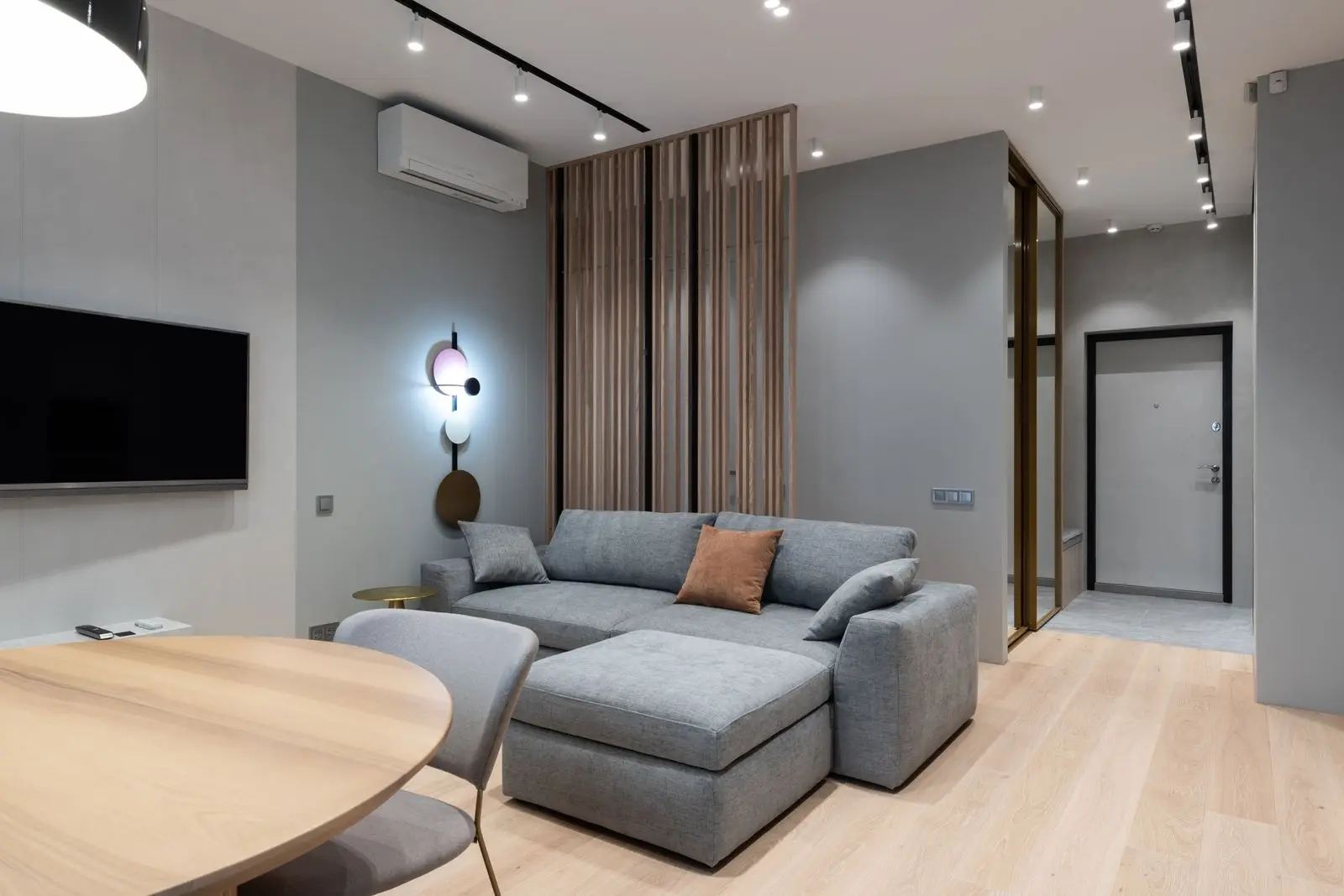
Getting the size right is the most important decision you'll make when buying an air conditioner — more important than the brand. Too small and it'll run flat out and never cool the room. Too big and it'll short-cycle, waste power and wear out early. Here's how to work out the capacity you actually need.
Quick answer: Air conditioners are sized in kilowatts (kW) of cooling capacity. As a rough guide, allow around 0.125–0.15kW per square metre of floor space. That puts a 20–30m² bedroom at roughly 2.5–3.5kW, an open-plan living area of 40–60m² at 6–8kW, and a whole home at a ducted 10–16kW. Ceiling height, insulation, window size and sun orientation all shift these numbers, so a professional heat-load calculation is the accurate method.
The rough sizing guide
Use this as a starting point, not a final answer:
| Room / space | Approx. floor area | Typical capacity |
|---|---|---|
| Study / small bedroom | 10–20m² | 2.0–2.5kW |
| Standard bedroom | 20–30m² | 2.5–3.5kW |
| Large bedroom / small living | 30–40m² | 3.5–5.0kW |
| Open-plan living / kitchen | 40–60m² | 6.0–8.0kW |
| Whole home (ducted) | — | 10–16kW+ |
Why "per square metre" isn't the whole story
Two rooms of the same size can need very different capacities. The factors that change the maths:
Ceiling height. A room with 3m ceilings has far more air volume to cool than one with standard 2.4m ceilings.
Insulation. A well-insulated home holds temperature; a poorly insulated one leaks it. Older brick homes and rooms under an uninsulated roof need more grunt.
Windows and orientation. Large windows, and especially west-facing rooms that cop the afternoon sun, gain a lot of heat. In South West Sydney, a west-facing living room can feel like a greenhouse by 4pm in January and needs sizing up.
Occupancy and heat sources. More people, plus appliances like ovens and computers, add heat load.
Why oversizing is a real mistake
It's tempting to think "bigger is safer," but an oversized air conditioner is a genuine problem. It cools the room so fast that it switches off before it has properly dehumidified the air, then switches straight back on — a cycle called short-cycling. The result is a room that feels cold and clammy, higher power bills, and more wear on the compressor. Right-sized beats oversized every time.
The professional method: heat-load calculation
For a reliable answer, a proper heat-load calculation accounts for all of the above — floor area, ceiling height, insulation, glazing, orientation, occupancy and local climate. This is especially worth doing in Sydney's hot inland suburbs like Hoxton Park, West Hoxton and Prestons, where summer heat regularly tops 40°C and a guess can leave you short.
Any reputable installer performs a heat-load assessment as part of quoting. If someone quotes a unit size over the phone without asking about your room, treat that as a red flag.
Match the size to the system
Once you know the capacity, it feeds directly into your choice between ducted and split and your installation cost. Bigger capacity means a higher price, which is exactly why paying for the right size — no more, no less — is the smart move.
Not sure what your rooms need? Book a free assessment with BES. We'll measure up, run the numbers, and recommend the right capacity for your home across Hoxton Park and South West Sydney.
Frequently asked questions
What size air conditioner do I need for a bedroom?
A typical bedroom of 20–30m² usually needs a 2.5–3.5kW split system. Smaller studies may only need 2kW, while larger master bedrooms with big windows or western sun can need more. Ceiling height, insulation and orientation all shift the figure.
What happens if my air conditioner is the wrong size?
An undersized unit runs constantly and never quite cools the room, driving up power bills. An oversized unit short-cycles — turning on and off rapidly — which wastes energy, controls humidity poorly, and shortens the unit's lifespan. Correct sizing matters for both comfort and cost.
How do you calculate air conditioner size?
A rough guide is around 0.125–0.15kW of cooling capacity per square metre of floor area, but a proper heat-load calculation accounts for ceiling height, insulation, window size and orientation, and how many people use the room. In Sydney's hot inland suburbs, a professional heat-load assessment is the reliable method.
Related guides
Ducted vs Split System Air Conditioning: The Complete Sydney Buyer's Guide (2026)
The single most common question we get in South West Sydney. Here's a straight answer based on your home and budget — not on what's most expensive to sell you.
Read guide
How Much Does Air Conditioning Installation Cost in Sydney? (2026 Price Guide)
Straight 2026 numbers for split, multi-split and ducted installs in Sydney, what actually drives the price up, and how the NSW rebate lowers it.
Read guide
Best Air Conditioner Brands in Australia (2026): An Honest Comparison
Daikin, Mitsubishi, Fujitsu, Panasonic, ActronAir — what each is genuinely good at, and which handles a 40°C Western Sydney afternoon without breaking a sweat.
Read guide
How to Reduce Your Air Conditioning Running Costs
Cooling a home doesn't have to cost a fortune. Here are the settings and habits that actually move the needle on your summer power bill.
Read guide