
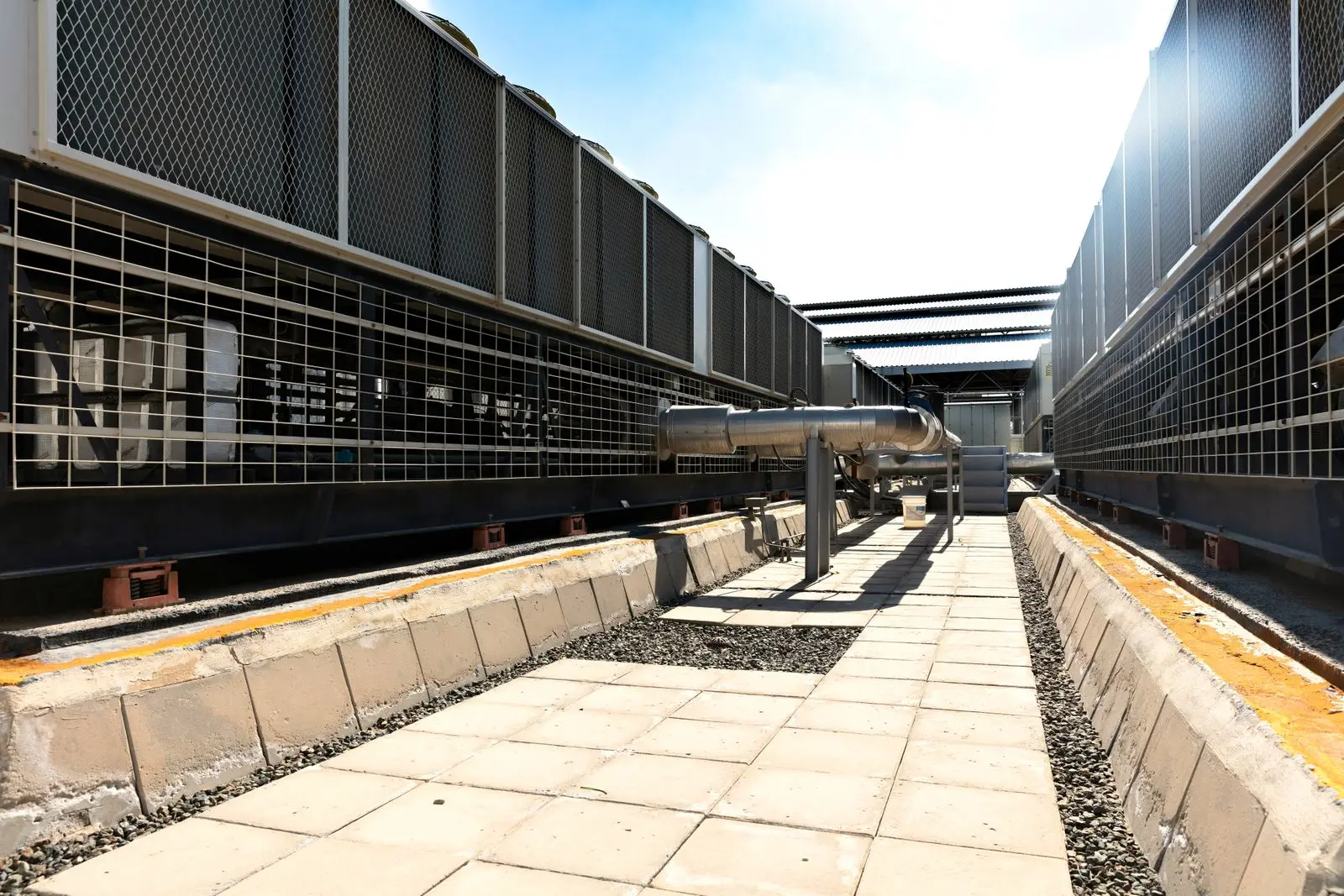
A retail shopfront, an open-plan office and a warehouse could not be more different as spaces — and they need completely different approaches to climate control. Choosing commercial HVAC isn't about picking a bigger version of a home system; it's about matching the solution to the space, its heat loads, and how people use it. Here's how to think it through.
Quick answer: The right commercial HVAC depends on the space. Small shops and offices often suit split or multi-split systems; larger offices frequently use VRF/VRV systems with many independently controlled indoor units; warehouses need solutions built for large air volumes and high ceilings. The decision hinges on heat loads (people, equipment, lighting, cooking, refrigeration), ceiling height, occupancy, ventilation and running costs — which is why a professional assessment is essential rather than a rule of thumb.
The factors that actually matter
Before choosing a system, a good installer weighs up several things specific to commercial spaces:
Heat load. This is the big one, and it's far more complex than a home. A commercial space gains heat from people (a busy shop or full office is a lot of bodies), lighting, computers and equipment, cooking in a food venue, and even refrigeration units in a retail setting. The system has to handle the total.
Size, volume and ceiling height. Floor area alone doesn't tell the story — a warehouse with a six-metre ceiling holds an enormous volume of air. Height and volume drive the capacity and the type of system needed.
Occupancy patterns. A space that's packed at lunchtime and empty at 3pm, or an office with a busy meeting room and quiet corners, benefits from zoning and independent control rather than one blunt setting for everything.
Ventilation and air quality. Commercial spaces often have specific fresh-air and ventilation requirements that a purely residential mindset overlooks.
Running costs. At commercial scale, efficiency isn't a nicety — inefficiency compounds into serious money. An efficient system sized correctly pays for itself over time.
Matching system to space
Shops and small offices. Split or multi-split systems are often the practical choice — cost-effective, and multi-split lets you condition several areas from one outdoor unit. For a retail space, customer comfort front-of-house is the priority.
Larger offices. VRF/VRV systems (variable refrigerant flow) are popular because they run many indoor units from a central system with individual room control — ideal for offices with varied loads across meeting rooms, open-plan areas and private offices, where different zones need different temperatures at different times.
Warehouses. Large volumes and high ceilings call for solutions designed for the scale, and the question is often whether to condition the whole space or focus on specific work areas, alongside ventilation for air movement. This is very much a case-by-case design problem.
Why a professional assessment is non-negotiable
You can't size commercial HVAC off a floor plan and a guess. The heat-load calculation, the ceiling height, the occupancy, the ventilation needs and the running-cost implications all feed into the right answer, and getting it wrong is expensive at commercial scale — either an underpowered system that can't cope or an oversized one that wastes money every hour it runs. A proper on-site assessment is the foundation of a system that works and doesn't cost a fortune to run.
Don't overlook the rebate
Efficient reverse-cycle systems may attract NSW Energy Savings Scheme incentives for small businesses, just as for households — and given commercial running costs, an efficient system is worth choosing on operating cost alone. An accredited installer can confirm what your business qualifies for.
Planning air conditioning for a shop, office or warehouse in South West Sydney? Contact BES for a commercial assessment and a system matched to your space and how you use it.
Frequently asked questions
What type of air conditioning is best for a commercial space?
It depends on the space. Small shops and offices are often well served by split or multi-split systems; larger offices frequently use VRF/VRV systems that run many indoor units with individual control; and warehouses need solutions designed for large air volumes and high ceilings. The right choice comes from a professional assessment of the space, its heat loads and how it's used.
How is commercial air conditioning sizing different from residential?
Commercial sizing must account for much higher and more varied heat loads — numbers of people, lighting, equipment, cooking, and refrigeration units all add heat — as well as ceiling height and air volume, occupancy patterns and ventilation needs. It's a more complex calculation than a home, which is why a professional load assessment is essential.
Can a business claim a rebate on commercial air conditioning?
Small businesses in NSW may be eligible for incentives on efficient reverse-cycle systems through the Energy Savings Scheme, similar to households. Because commercial running costs are significant at scale, choosing an efficient system also delivers meaningful ongoing savings. An accredited installer can confirm eligibility.
Related guides
Commercial HVAC & Refrigeration for South West Sydney Businesses
For a business, a failed system isn't discomfort — it's lost stock, lost customers, lost revenue. Here's what commercial HVAC and refrigeration involves, and why it's a different game to home systems.
Read guide
Commercial Refrigeration & Coolroom Maintenance: A Business Owner's Guide
A coolroom failure can cost thousands in spoiled stock overnight. Here's the maintenance that prevents it — and the warning signs that mean call now.
Read guide
Ducted vs Split System Air Conditioning: The Complete Sydney Buyer's Guide (2026)
The single most common question we get in South West Sydney. Here's a straight answer based on your home and budget — not on what's most expensive to sell you.
Read guide
The NSW Air Conditioning Rebate Explained (2026): How to Save on Your Upgrade
The NSW government will knock hundreds off an efficient reverse-cycle install — applied straight to your quote. Here's how the 2026 scheme actually works and who qualifies.
Read guide